Living room lighting: how to choose a lamp?
Living room lighting: how to choose a lamp?
The living room is a multi-purpose room: we receive guests in it, we rest, sit at the table, work and watch TV. The lighting in the living room must, therefore, be adapted to many needs. You can not rely on one light source. The more diverse frames, the easier it is to get out the interior and create the right mood. Lighting design is not worth leaving at the end - before the renovation, draw a good plan of the interior and determine where the lamps will be. Otherwise, the walls will scare unsightly cables or the lighting will be poorly arranged.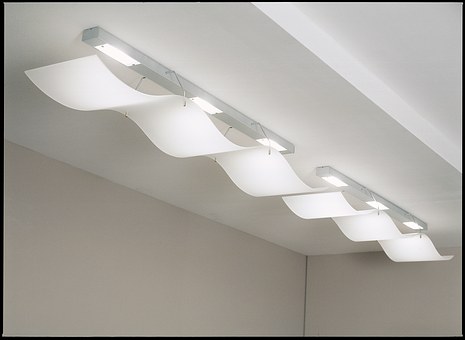
1. Lighting for the living room: a pendant lamp, a ceiling lamp or a chandelier for the living room?
2. Floor lamps - complementing ceiling lighting
3. Decorative lamp for the living room
4. Wall lamp for the living room - complementing the ceiling lighting
5. Lighting in the living room - how to arrange them?
6. The lighting of the rest area
7. Living room and dining room lighting
Lighting for the living room: a pendant lamp, a ceiling lamp or a chandelier for the living room?
General lighting for the living room is to replace the daylight in the room. It's best to hang them in the middle of the room - to evenly illuminate all zones. The exception is the unusual shape of the interior - in this case, it is worth installing light spots in each zone. The ceiling light is a luminaire suspended from the ceiling or embedded in it.In a high interior, you can splurge with a large, decorative lamp on the cable or a chandelier. In a small and a small room, it will work better.
In a spacious living room, put a good lamp with several bulbs so that the light comes in different directions. An additional plus is the ability to adjust the direction of the light.
Regardless of the model, the shade may not be less than 200 cm from the floor. Such a distance guarantees a free passage under the lamp.
The ceiling lamp can be lit up or down. When choosing a model glowing up, the ceiling should be painted white - it will work like a large screen that will reflect and thereby multiply the light.
At the ceiling lamp switches, you can use dimmers that will allow you to dispense the amount of light. Upper lighting will then also be able to perform decorative functions.
Floor lamps - complementing ceiling lighting
ceiling lighting can be completed in putting a floor lamp - the best in the nearby couch or chair holiday. They can be topped with a lampshade, lampshade, decorative bulb or reflectors. Some models are connected to an auxiliary table, others have an adjustable arm or a heavy base that protects the equipment against overturning. The standard height of the floor lamp is 150-180 cm.Floor lamps can be lit up or down. Models with a shade directing the light down most often have a decorative function, creating the right mood in the living room. Models with a lampshade illuminating the ceiling give more light and in small spaces are often also used as the main lighting.
A practical idea is to install - next to the ceiling light switch - a second switch that would activate the current in the contact intended for the floor lamp. Entering the living room, you can decide whether you want to illuminate the room with a strong upper light, or turn on the mood lighting that the floor lamp gives.
Comments
Post a Comment